Crawl Space Structural Repair in Charleston, SC
Crawl space structural repair means fixing the beams, joists, posts, and sill plates that hold your floors up. If your floors sag, bounce, or slope, one of those parts may be damaged, rotted, or no longer doing its job.
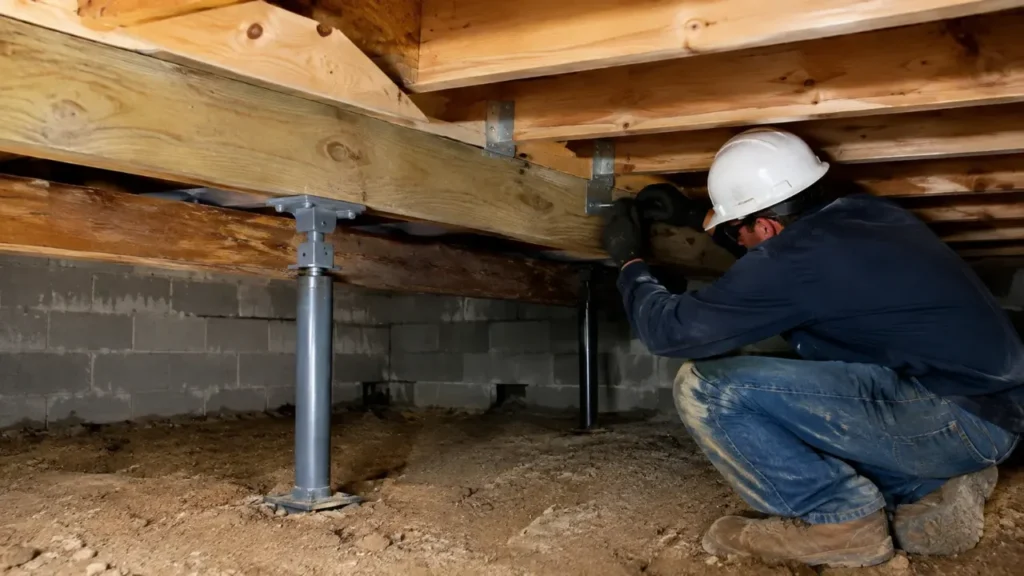
We inspect crawl spaces across the Charleston Peninsula, Mount Pleasant, James Island, West Ashley, Johns Island, North Charleston, and Summerville. We look for what is actually causing the problem, including moisture, and explain your options before any work starts. Request a free inspection and we will tell you plainly what we find.
We’ve Protected 500+ Crawl Spaces in the Lowcountry
For over 10 years, our team has worked in crawl spaces across 15+ Lowcountry communities. Homeowners have left us 50+ five-star reviews, and we stand behind our work with a 100% satisfaction commitment. Structural problems rarely show up alone, so we also handle vapor barriers, dehumidifiers, drainage, and mold. We look at the whole crawl space, not just one beam.
What Is Crawl Space Structural Repair?
It is the repair of the parts of your floor system that carry weight. The goal is a stable floor, and a fix for whatever caused the damage so it does not come back.
It is different from related services:
- Encapsulation and moisture control seal and dry the space. They protect the wood but do not rebuild damaged support.
- General crawl space repair covers a wider range of fixes. This page is about the load-bearing parts.
- Foundation work deals with the foundation walls and footings of the home.
The two often go together: dry out the space, then repair what the moisture damaged.
Signs Your Crawl Space May Need Structural Repair
- Floors that sag, slope, or feel bouncy
- Doors or windows that stick
- Cracks in drywall, especially above doors and windows
- Gaps between the floor and the baseboards
- Soft, dark, or crumbling wood under the house
- Rusted or tilting metal jacks, or bricks, blocks, and stacked wood used as supports
One sign does not prove there is a structural problem, and some have other causes. Together they are a good reason to have someone look under the house.
Common Structural Problems We Look For
1. Sagging or uneven floors
A dip in the floor usually means the support under it has moved, failed, or was never enough. We inspect what is underneath, because the floor itself rarely tells the whole story.
2. Damaged or rotted floor joists
Joists carry the floor and everything on it. Moisture, decay, and pests can weaken them. Depending on the damage, a joist can be reinforced or replaced.
3. Damaged beams and girders
Beams collect the load from many joists. A beam that is cracked, rotted, or overloaded can affect the whole floor above it.
4. Sill plate and subfloor damage
The sill plate sits on the foundation wall, and the framing rests on it. It is exposed to moisture, so damage often shows up along the edges first.
5. Missing, sinking, or failing support posts
Posts need a solid base. Posts sitting on bare soil, or ones that have settled or rusted, can leave the beam above unsupported.
What Causes Structural Damage in Charleston Crawl Spaces?
These are the causes of structural damage:
- Long-term moisture and humidity under the house
- Standing water or poor drainage
- Plumbing or HVAC leaks
- Wood decay and pests
- Aging or undersized original framing
- Temporary fixes that were never done right
Charleston’s warm, humid climate is one reason moisture control matters under local homes. We do not guess about any one house, though. The cause gets confirmed by looking, and if moisture is behind it, new wood sitting in the same conditions can fail again. That is why we deal with moisture alongside the repair.
Our Crawl Space Structural Repair Process
How exactly does the structural repair Charleston work? Here’s what actually happens, step by step.
STEP 1
We get under the house
We inspect the beams, joists, posts, and wood condition, and check how far the floor has dropped.
STEP 2
We find the cause
A sagging floor is a symptom. We check for moisture, leaks, pests, and missing or failed support so the repair fixes the reason, not just the sag.
STEP 3
We repair the structure
We add or replace support, reinforce or replace damaged joists and beams, and repair sill plates where needed, using the method that fits your crawl space.
STEP 4
We Manage Moisture Together
If moisture caused the damage, we address it. Then we go over the finished work with you and answer your questions.
Structural Repair Methods and When They Fit
No single method works for every house. Here are the common options, and we explain which ones apply to your home.
| Method | What it does | Good to know |
|---|---|---|
| Support posts or adjustable steel jacks | Adds or replaces vertical support under beams and joists | Needs a solid footing or base; placement matters |
| Sistering a joist | Fastens a new joist alongside a weakened one | Does not fix the cause; moisture still has to be handled |
| Joist replacement | Replaces a joist too damaged to reinforce | Used when the rot or damage is extensive |
| Beam repair or replacement | Restores the main horizontal support | The floor usually needs temporary support during the work |
| Sill plate repair | Replaces or reinforces decayed wood on top of the foundation wall | Often points to moisture getting in at the wall |
What Some Contractors Get Wrong
- Fixing the sag and ignoring the cause. A new post under a wet beam will not last if the moisture is still there.
- Using stacked blocks or shims as support. They can shift, and they are not a permanent fix.
- Skipping the footing. A post needs a solid base, or it can sink and the floor drops again.
- Giving a price before looking. Nobody can price this accurately without going under the house.
Do You Need a Permit or a Structural Engineer?
South Carolina bases its residential building rules on the 2021 International Residential Code with state changes, in effect since January 1, 2023. Whether a repair needs a permit, an inspection, or an engineer depends on the scope of the work and your local building department. If we think the damage is serious enough that an engineer should look at it, we will tell you.
What Affects the Cost of Crawl Space Structural Repair?
The price depends on your house, so we give you a written estimate after an inspection. The main factors:
- How much of the structure is damaged
- How many supports are needed, and what kind
- How tight the crawl space is and how hard it is to reach
- Whether wood can be reinforced or has to be replaced
- Whether moisture work has to be done first
- Any permit or engineering requirements
Does Homeowners Insurance Cover Structural Repair?
It depends on what caused the damage and what your policy says. Sudden events are often treated differently from long-term moisture or wear. Call your insurance company before you count on coverage, and ask us for a written description of what we find if you need one.
Areas We Serve Near Charleston
CrawlSpace Wardens provides reliable crawl space structural repair services across Charleston, SC, and the surrounding areas. We help homeowners protect their crawl spaces from excess moisture, humidity, and ground moisture with structural repair solutions designed for long-term performance. Explore the areas we serve below to find professional structural repair services near you.
Charleston Peninsula
Mount
Pleasant
North Charleston
West Ashley
Johns Island
James Island
Summerville
Think ground moisture is affecting your crawl space? Request a free inspection and we’ll tell you exactly what’s happening down there — no pressure, no upsell.
FAQs
Ready to Find Out What’s Going On Under Your Floors?
If your floors sag, bounce, or slope, let us take a look. We will tell you what we find, what is causing it, and what your options are. Request a free inspection through the form, or email info@crawlspacewardens.com. We are available 24/7 at 806 Elsey Dr, Charleston, SC 29407.
Contact Now
Not sure what your crawlspace needs? Send us your question and we will help you understand your options.
CrawlSpace Wardens
Licensed, insured crawl space encapsulation and repair, protecting Charleston, SC homes from the ground up.