
Crawl Space Drainage & Sump Pump Installation — Charleston, SC
If water has been seeping into your crawl space, whether it’s pooling up after every rain or just staying wet no matter what you do, you’re combining two different problems under “drainage,” and they’re not the same. We have been installing crawl space drainage systems and sump pumps for homeowners throughout Charleston, SC, for over 10 years.
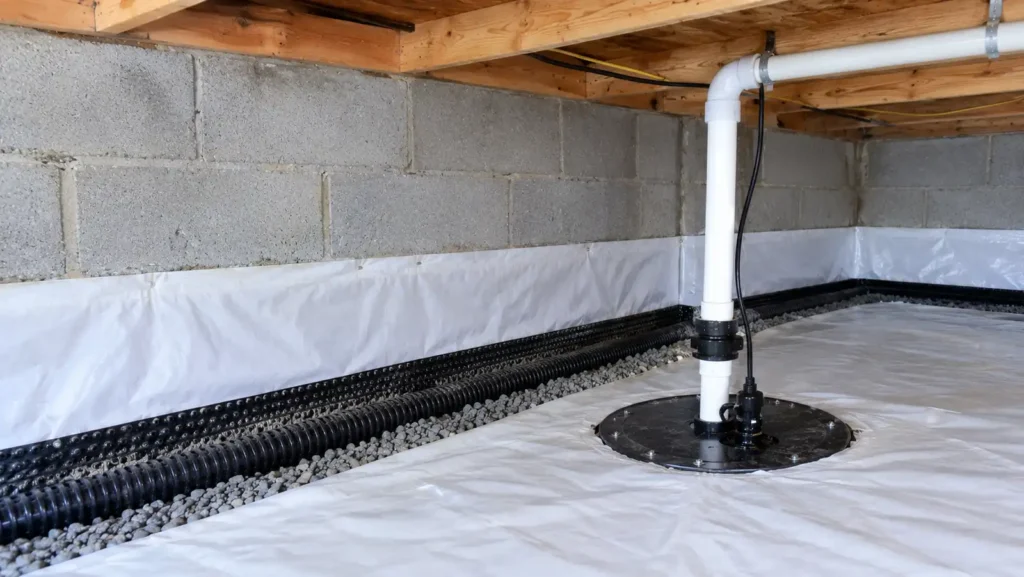
We’re not going to try and sell you a French drain when what you really need is a sump pump, or vice versa. We’ll tell you which one your crawl space needs – sometimes it’s both, sometimes it’s one.
We have protected over 500 crawl spaces in the Lowcountry
We have protected 500+ crawl spaces around the Lowcountry, and that number continues to grow monthly. We’ve been in the drainage business for over 10 years, and we know what drainage systems really hold up in Charleston’s water table and which sump pumps fail at the worst possible time – usually mid-storm, when the power’s already out.
We are fully licensed and insured in South Carolina. We have over 50 five-star reviews and a 100% satisfaction rate with our customers. We service 15+ communities throughout the Charleston area.
Two Problems, Two Solutions: Drainage and Sump Pumps
What’s the actual difference? Crawl space drainage is usually a French drain, though we also install curtain drains and interior perimeter drains depending on where the water’s coming from, redirecting water before it ever has a chance to pool in your crawl space. It’s a perforated pipe bedded in gravel, sloped just enough to carry surface water and shallow groundwater away from your foundation before it becomes standing water. A sump pump solves a different problem: it removes water that’s already collected, pumping it out through a discharge line once it reaches a sump basin.
If you’ve searched around, you’ve probably noticed different sites give different answers for how many “types” of drainage systems exist; some say two, some say three, some say four. In practice, for a Charleston crawl space, it comes down to two real categories: exterior systems that intercept water before it reaches the foundation, and interior systems that manage water that’s already gotten in. Everything else is a variation on those two.
Neither a drain nor a pump replaces the other. A drainage system with nowhere for the water to go still needs a pump to move it out. A sump pump with no drainage feeding into it is reactive by design; it’s just waiting for water to find it on its own, usually through cracks, gaps, or wherever groundwater pushes in unevenly around your foundation.
Crawl Space Drainage Systems in Charleston
What are the signs your crawl space needs a drainage system?
French Drain Types We Install
Not every drainage problem needs the same solution. We install four types depending on where the water’s actually coming from:
Depth, Slope & Gravel-Bedding Standards We Follow
A French drain that isn’t sloped correctly just becomes an underground pond. We dig to 18-24 inches, maintain roughly a 1% slope (about one inch of drop for every 10 feet of pipe), and bed the pipe in a minimum of 3 inches of compacted gravel before backfilling. We line the trench with filter fabric to keep silt and fine soil from clogging the pipe over time.
That filter fabric matters more than most homeowners realize. A properly installed French drain with quality fabric can perform for 20-30 years. Skip it, or use a cheap fabric that clogs fast, and you’re looking at 5-7 years before the system starts backing up again, and by then it’s buried, which makes the fix a lot more expensive than doing it right the first time.
Sump Pump Installation, Repair & Replacement in Charleston
How do you know if you need a new pump, or a repair?
Signs You Need a New Pump
Signs Your Existing Pump Needs Repair or Replacement
Submersible vs. Pedestal vs. Battery-Backup
We install submersible pumps in almost every crawl space; they sit inside the basin, run quieter, and handle Charleston’s low-clearance crawl spaces better than pedestal units, which mount above the basin and need more headroom. For most homes, we pair the primary pump with a battery-backup unit. That’s not an upsell; it’s specific to living here. Charleston’s heaviest rain events are frequently the same events that knock out power, which means a primary pump with no backup can fail at exactly the moment you need it most.
Is a Sump Pump a Red Flag When Buying a Charleston Home?
Short answer: no, and it’s usually the opposite. This is one of the most common questions we get, and we understand why a sump pump can look like evidence of a water problem. But a properly installed sump pump is a sign someone already solved a water problem the right way, rather than ignoring it. What should actually raise a question isn’t the presence of a sump pump; it’s an old, corroded, or unmaintained one, or a crawl space with obvious water damage and no drainage system at all.
If you’re buying a home with an existing sump pump, ask when it was installed, when it was last serviced, and whether it has a battery backup. Those answers tell you a lot more than the pump’s presence alone.
Do You Need Drainage, a Sump Pump, or Both?
Most Charleston crawl spaces that have a real water problem need both. Working together, the drainage system controls where the water goes, and the pump removes it once it gets there. A drain with nowhere to route the water just relocates the puddle. A pump with no drainage feeding it is reactive instead of preventive. We inspect first and tell you honestly which one (or both) your specific crawl space needs, rather than defaulting to whichever is more profitable to install.
Why Charleston Floods in the Same Spots, Every Time
Charleston sits at an average elevation of only about 20 feet, and a meaningful portion of the peninsula, historians estimate close to 40%, isn’t original land at all. It was filled in over tidal creeks that used to run through what’s now downtown. Those filled-in creek beds are still the lowest points in the city, which is why flooding shows up at the same intersections, storm after storm. King and Huger Streets and stretches of East Bay Street are well-documented examples. Historic maps like the Halsey Map, along with LIDAR surveys done by the Charleston Museum, show those original creek paths almost exactly matching today’s worst flood zones. The city’s original high ground was concentrated between Rutledge Avenue and Meeting Street, which is part of why homes further from that ridge tend to see water first.
Understanding Charleston’s Flood Zones
If you’ve looked at a FEMA flood map for your property, the zone designation actually tells you something useful. AE and VE zones are high-hazard areas within the Special Flood Hazard Area; homes here face the most direct flood risk and typically carry mandatory flood insurance requirements. X and X-Shaded zones carry low to moderate risk. South Carolina’s building code also defines a Coastal A Zone (under the 2021 SC Building Code, effective statewide since January 2023) for areas that face wave-related flood risk without meeting the full VE-zone criteria; you’ll sometimes see this referenced by its technical boundary, the LiMWA (Limit of Moderate Wave Action). None of this is just paperwork; it genuinely affects what kind of drainage and pump setup makes sense for your specific property.
Our Installation Process
How exactly does the installation work? Here’s what actually happens, step by step.
STEP 1
Inspection
We assess where water is entering, how it’s moving through the crawl space, existing drainage or pump condition, and whether the issue is groundwater, surface runoff, or both.
STEP 2
Custom Plan
A home near the filled-creek low points downtown needs a different plan than a newer build on higher ground in Summerville. We size and design around your property, not a standard package.
STEP 3
Installation
We install French drains, sump basins, and pumps to the depth, slope, and material standards above — sealed, sloped correctly, and tied into a discharge line routed well away from the foundation.
STEP 4
Testing
We run water through the system before calling the job done, confirming the pump activates correctly and the drainage actually moves water where it’s supposed to go.
Why Charleston’s Historic Homes Are Especially Vulnerable
A lot of older homes here, particularly around South of Broad, Harleston Village, and parts of Mount Pleasant, were built before sump pumps and modern drainage were standard practice. That’s genuinely why so many old houses don’t have one: it simply wasn’t part of how homes were built a century ago, not because the ground was any drier back then. These homes were also frequently built with vented crawl spaces, which means humid air and groundwater have had a direct, unmanaged path into the crawl space for decades.
What Some Installers Get Wrong
We’ve seen drainage systems installed without the proper slope, gravel bedding skipped to save time, and sump pumps sized off a generic chart instead of the actual crawl space. We’ve also seen quotes that never even mention whether the work needs a permit. We size every system to the property, follow the depth and slope standards above every time, and tell you upfront if a permit applies to your project.
Maintenance: What to Expect
Drainage systems need their inlet and outlet points checked periodically to stay clear of dirt and debris, and if a section clogs, flushing it with water usually clears it before anything needs to be dug up. Sump pumps should be tested a few times a year by pouring water into the basin and confirming the pump activates and drains it, with battery backups checked to make sure they’re still holding a charge.
Does Homeowners Insurance Cover This?
Usually not. Standard homeowners insurance covers sudden, accidental damage, not the cost of installing a drainage system or sump pump as a preventive measure. If flooding has already caused damage, check whether a separate flood insurance policy applies, since standard homeowners policies typically exclude flood damage entirely.
FAQs:
Areas We Serve Near Charleston
CrawlSpace Wardens provides reliable crawl space drainage systems and sump pump installation services across Charleston, SC, and the surrounding areas. We help homeowners protect their crawl spaces from excess moisture, humidity, and ground moisture with durable vapor barrier solutions designed for long-term performance. Explore the areas we serve below to find professional crawl space drainage systems and sump pump installation near you.
Charleston Peninsula
Mount
Pleasant
North Charleston
West Ashley
Johns Island
James Island
Summerville
Think ground moisture is affecting your crawl space? Request a free inspection, and we’ll tell you exactly what’s happening down there — no pressure, no upsell.
Contact Now
Not sure what your crawlspace needs? Send us your question and we will help you understand your options.
CrawlSpace Wardens
Licensed, insured crawl space encapsulation and repair, protecting Charleston, SC homes from the ground up.